
Disclaimer: This post contains affiliate links. If you make a booking or purchase through these links, we may earn a small commission at no extra cost to you. Read our full Affiliate Disclosure for more information.
📍 Explore Campania:
Last updated on:
July 20, 2026
Published on:
April 9, 2026
Last updated on:
July 20, 2026
Published on:
April 9, 2026
The Naples National Archaeological Museum (commonly known as the MANN) is the city’s premier museum and houses one of the greatest collections of historical artefacts anywhere in the world.
No visit to Naples would be complete without at least a short stop here to marvel at the galleries and halls filled with masterpieces from across Naples’ and Italy’s history, and I have lost count of the number of times I have marvelled at the collection. So, let me share with you everything you need to know about visiting the MANN in Naples.

Are you ready to step inside Naples’ premier museum?
Why You Should Visit the Naples National Archaeological Museum
The National Archaeological Museum of Naples is home to one of Italy’s most renowned and historically significant collections of sculptures from ancient Rome, Egypt, Greece and beyond. You’ll also find an unrivalled display of original mosaics, ancient everyday items (preserved in the famous eruption of Vesuvius, buried and then uncovered from Pompeii and Herculaneum) and much more.
For Sara and I – as avid history lovers – the MANN is somewhere we return to time after time. We love seeing our favourite pieces (more on these below), as well as wanting to see the special exhibitions that the museum routinely hosts.
Visiting the MANN is easy and straightforward, and in this guide, we’ll share everything you need to know to visit for yourself, including:
A Brief History of the MANN
The story of the Naples National Archaeological Museum goes back to 1734, when Charles III of Bourbon became King of Naples. Through his mother, Elisabetta Farnese, he inherited an extensive collection of ancient artwork, sculptures, and artefacts. The Farnese family had amassed these works across the centuries as one of Italy’s most powerful families, with connections across the country and Europe. They were passionate collectors of Greek and Roman works in particular, and sponsored extensive excavations at important locations such as the Palatine Hill and Baths of Caracalla in Rome.
This “Farnese Collection” as it came to be know formed the nucleus of the MANN’s permanent collection, though it took several decades to relocate everything to Naples from the family’s previous holdings in Rome and northern Italy.
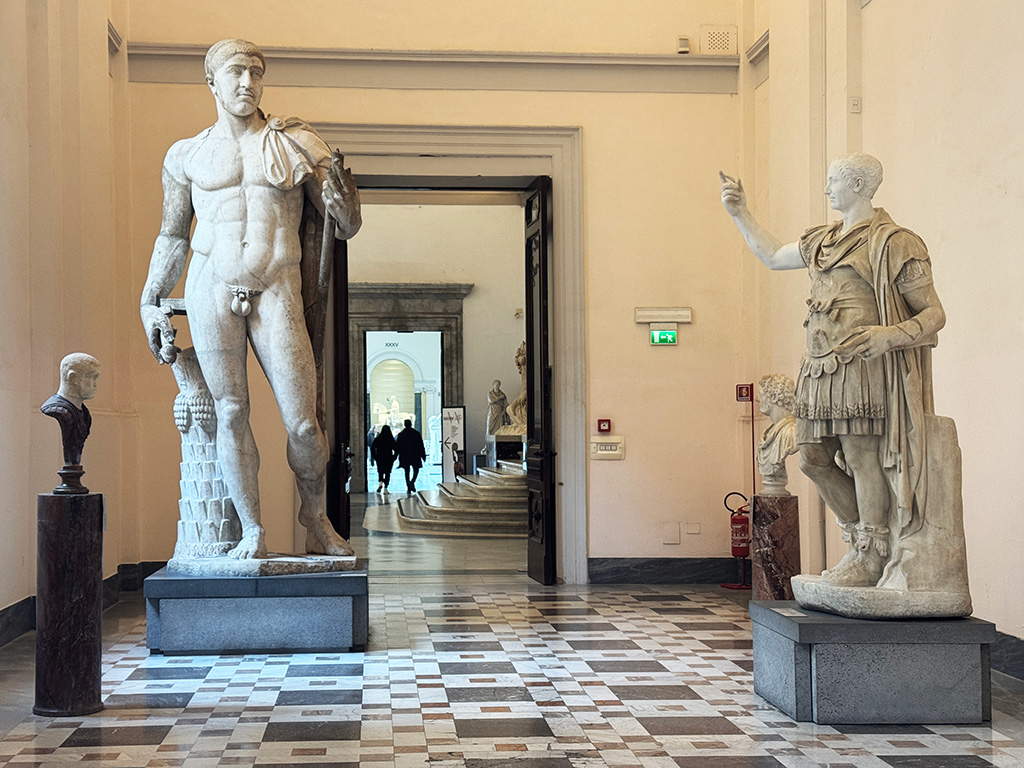
Few museums anywhere in the world can rival the MANN’s collection of Roman statuary
Initially, Charles III looked to house his inheritance at the newly constructed Capodimonte Palace. However, as the kingdom’s collection grew – especially as large-scale excavations at Pompeii and Herculaneum got underway in the 1740s and 1750s – it became obvious that a larger, dedicated space was needed to display both the Farnese treasures and the countless new discoveries from across Campania.
Charles’ successor, Ferdinand IV, opted to renovate and expand the Palazzo degli Studi di Napoli, with the transfer of artefacts beginning in 1787. The archaeological museum was inaugurated in 1816 and has remained Naples’ main museum ever since.
The MANN Today
Thankfully, despite heavy bombing in the area, the museum avoided significant damage during World War II, and in the 1950s, the vast collection of paintings was moved to the Capodimonte gallery in the old royal palace. This split allowed the two properties to focus on their respective specialties. The Naples National Archaeological museum was officially created, dedicated to the archaeology and history of Campania and southern Italy.
Today it is one of Italy’s most important museums for understanding the world of ancient Rome, and a must-see for anyone coming to Naples.
Important Visit Information
Here are the fundamentals for planning any trip to the Naples National Archaeological Museum:
Location
The MANN is located at Piazza Museo 19, in the heart of Naples, located around 15 minutes on foot north of the historic center and Spaccanapoli area. It is also only around a 20 minute walk from Napoli Centrale train station. I share below more details on getting to and from the MANN – click here to jump to that section now.
Opening Hours
The museum is generally open 09:00 – 18:30. Note that the museum is typically closed on Tuesdays, and major national holidays such as Christmas Day. For the latest information about opening hours (and closures) check the official website here.
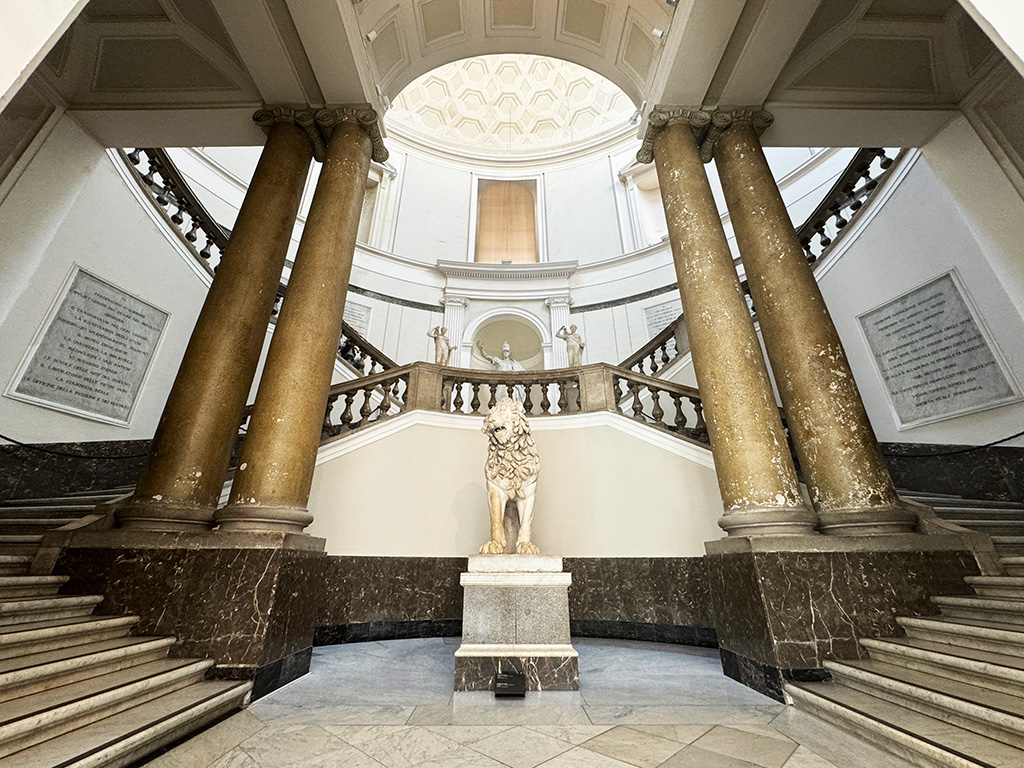
Beyond being one of the top collections of ancient artefacts in the world, the structure of the MANN itself is architecturally beautiful
Tickets & Tours
Entrance tickets to the MANN can be purchased online via the official website, as well as authorised third parties such as GetYourGuide or Headout. If reserving your tickets through a third-party, you’ll often find these ‘bundled’ with a digital guide which is a great addition to any visit, helping you to better understand the museum’s huge collection.
You’ll also find plenty of options for taking a guided tour of the Archaeological Museum of Naples. These sometimes include just the museum, but can also include a trip to Pompeii, as much of what you will see in the MANN came from this ancient site.
Accessibilty at the MANN
The MANN is an accessible-friendly museum, with lifts in place enabling all visitors to move between floors easily. Bathrooms are also accessible via elevator, as well as the special exhibition areas and basement.
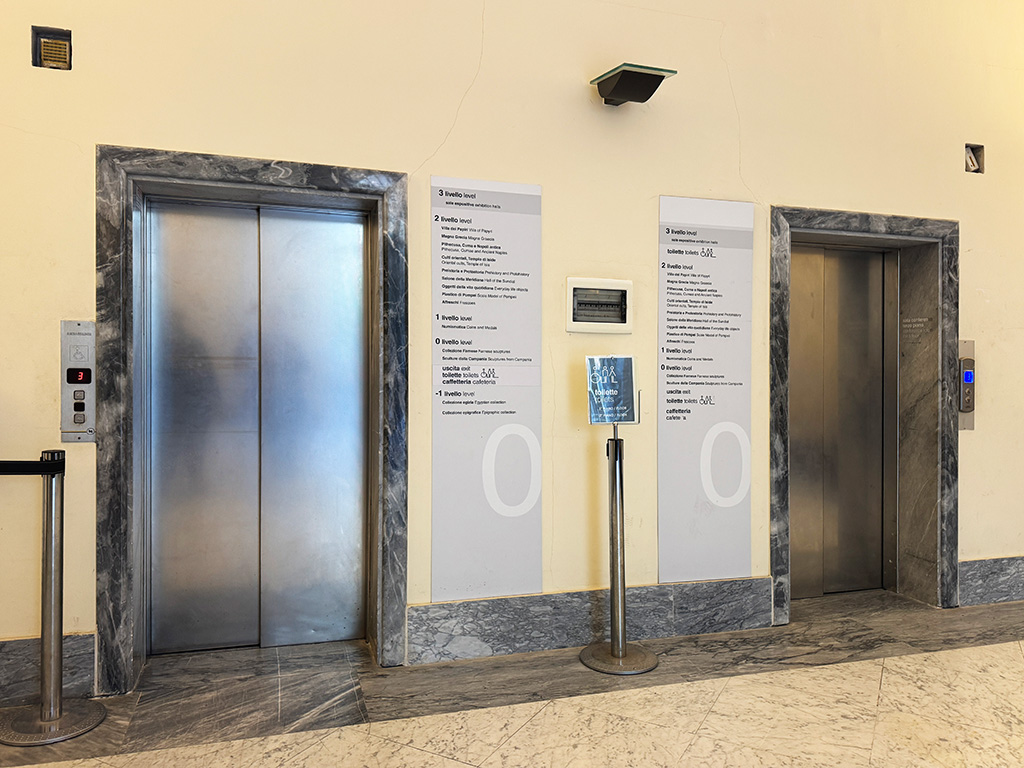
You may need to ask staff members for access to the elevators, but there are always plenty of people around in all areas of the museum
Where to Stay Near the MANN
If a visit to the Naples archaeological museum is the focal point of your trip, I recommend staying nearby, specifically in the area around Piazza Dante which is only a 10-minute walk away. Our go-to place in this part of Naples is La Gemma, a cozy B&B overlooking the piazza below. This area is ideal for visiting the national museum, as well as being close to the historic centre and the Naples metro with connections to Napoli Centrale.
Alternatively, if you are coming to Naples by car, consider staying at Villa Nikita in the Capodimonte area where you can park, and then reach the MANN on foot (30 minutes) or via bus (15 minutes).

Where should you stay in Naples?
What is the best neighbourhood in Naples? Where are the top hotels? Is Sorrento a better base than Naples in the wider region of Campania? We answer these questions and more in our dedicated guide to Where to Stay in Naples:
Getting to the MANN
Being located in the centre of Naples, getting to the Naples National Archaeological museum is very convenient; here are your options for reaching the MANN:
Metro (Line 1)
The museum is served by its very own station – Museo – which is right by the entrance. You can reach the MANN from most parts of the city quickly therefore via Metro Line 1, with the journey taking around 10 minutes from Napoli Centrale (Garibaldi station) or 15 minutes from Naples’ port (Municipio station).
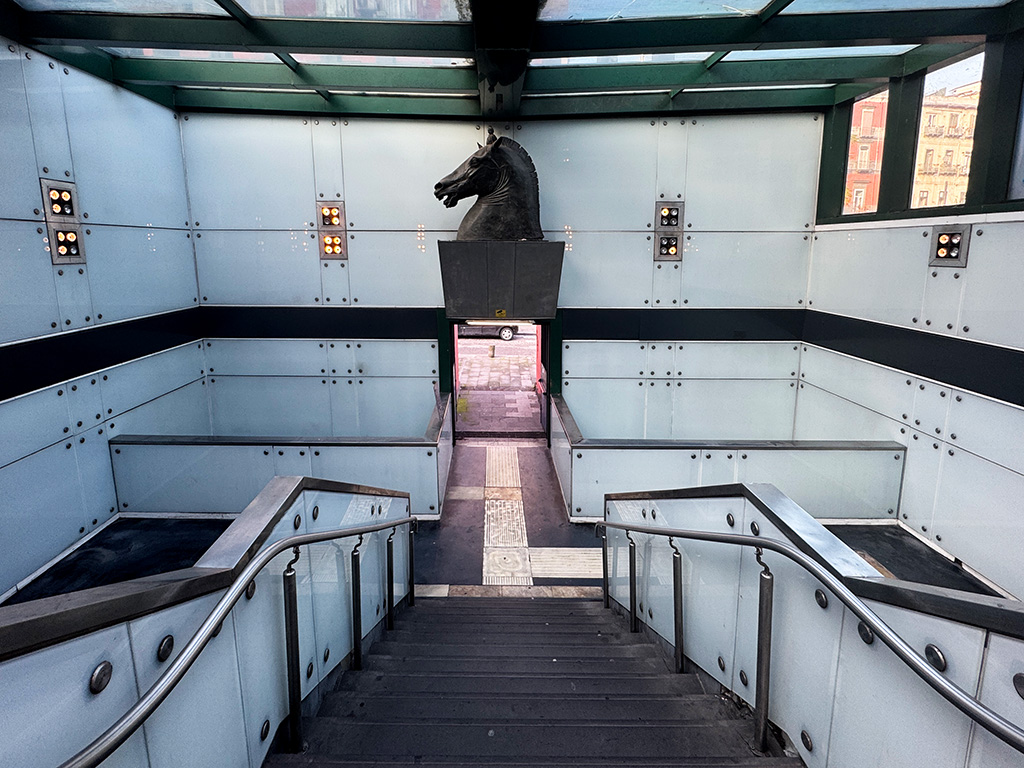
The Museo metro stop is the closest to the MANN, just a few steps from the museum entrance
Bus
The museum sits at a major intersection served by multiple bus routes. I recommend using Google Maps to plan your specific journey on the day of your travel, and using our detailed guide to Naples’ public transport to understand how best to use the city’s bus network.
Organize your transport easily and stress-free for any trip to Naples and Campania:
Everything you need to know about getting around Naples can be found here
On Foot
If you are sightseeing in the historic center, walking to the MANN is simple. Approximate travel distances on foot are as follows:
- Piazza Dante: 10 minutes
- Spaccanapoli / Via Tribunali: 15 minutes
- Spanish Quarter: 20 minutes
- Napoli Centrale: 25 minutes
- Naples Port (Molo Beverello): 45 minutes
By Car – Taxis and Driving
I do not recommend driving yourself to the MANN. Traffic is heavy in this part of Naples nearly all day long, and finding parking is almost impossible unless you opt for an expensive parking lot or garage.
If you are looking to arrive at/depart the MANN by car, taking a taxi is a better option. Taxi drivers can use the city’s dedicated bus lanes, reducing time spent in traffic.
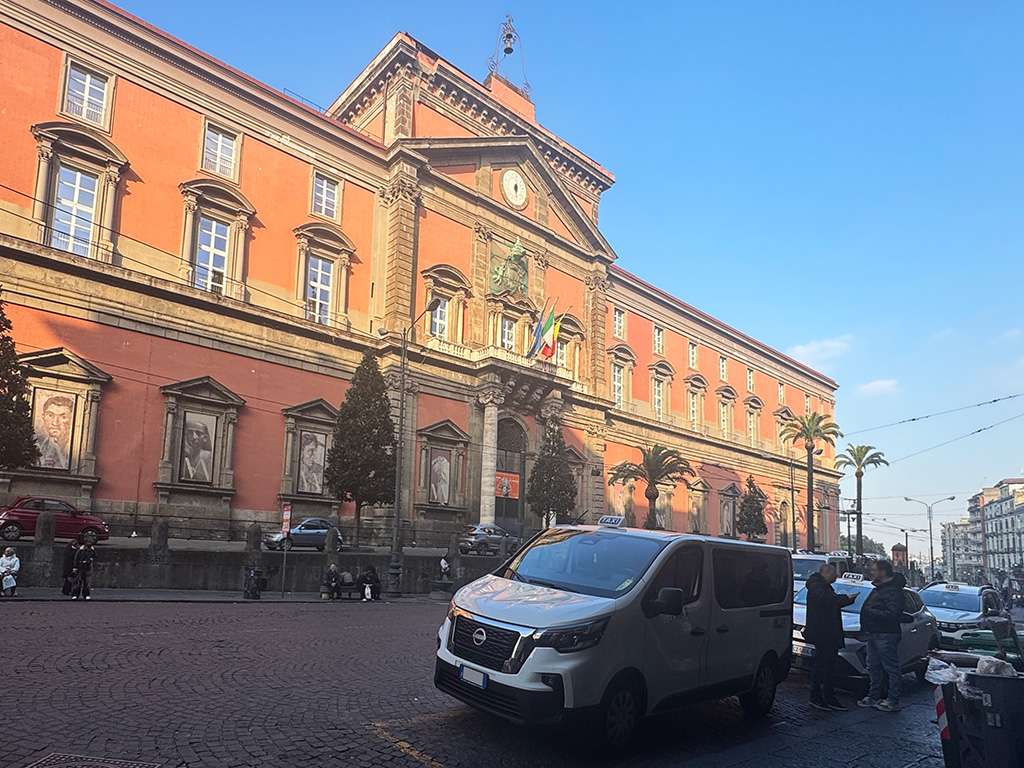
You’ll find a taxi rank directly outside the entrance to the MANN (across the road) where you’ll get dropped off and picked-up by local drivers
What to See: Our Favourite Highlights of the MANN
While smaller than other major Italian museums like the Vatican Museums or the Uffizi in Florence, the MANN is still one of those museums where it is impossible to see everything in a single day. We recommend focusing on these four areas for a spectacular two-three hour visit:
Ground Floor: Farnese Collection
The showstopper collection of ancient statues that make up the famous Farnese collection occupies most of the MANN’s ground floor, accessed immediately as you enter the museum.
By following the sequence of rooms that ring the main atrium, you’ll be awed by the scale and detail of the works preserved here, many of which were originally discovered in Rome. Our two absolute standouts are:
Farnese Hercules
This imposing statue (3.17m/10.5 feet high) of ancient Greek hero Hercules is probably the most famous piece in the museum’s collection, and that’s even with the fact that not many people know its fascinating history.
The statue was originally unearthed in the mid-1500s in the Baths of Caracalla in Rome, or at least most of it was. Initially the legs of the statue were not found, which led to Michelangelo (yes, that Michelangelo) commissioning a peer, Guglielmo della Porta, to create new legs. Later the original legs were found, but the Farnese family, proud of Guglielmo’s work, opted not to replace the copies with the originals.
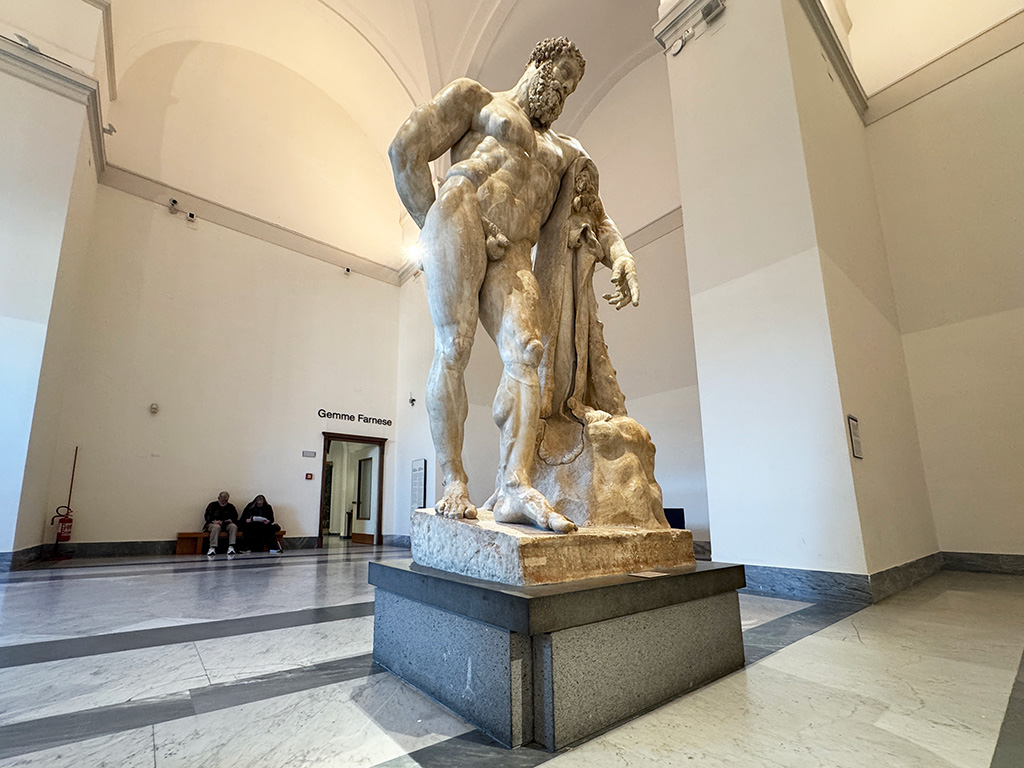
Seeing is believing when it comes to the Farnese Hercules
It was not until 1787 that the original legs were eventually fused back with the body under the request of the Bourbons, meaning that what we see today is the full original statue as created by the ancient Athenian sculptor Glykon. We know this because he signed his work!
This is an ancient Roman copy of a Greek bronze sculpture, but a particularly fine example. The features of Hercules as he rests on his club fully articulate his weariness as he works through his twelve labours, and the detail in the marble is remarkable.
Farnese Bull
This breathtaking sculpture group is the single largest marble work ever recovered from antiquity. Measuring a huge 3m by 3m at its base, and 3.7m tall, it was discovered in 1545 in fragments in the Baths of Caracalla just like the Hercules statue, and was reassembled under the sponsorship of the Farnese family.
The scene portrayed by the various figures is a famous story from Greek mythology; the Punishment of Dirce. This complex tale full of jealously, rivalry and violence, is brought to life in this masterpiece, which thanks to its setting in the MANN can be admired from all angles – just as it was intended in ancient times.
Make sure to walk around it slowly to get the full effect. The last time we visited, it was on a quiet December day and we had it to ourselves, but the room is so large that even in busier periods you can take your time here.
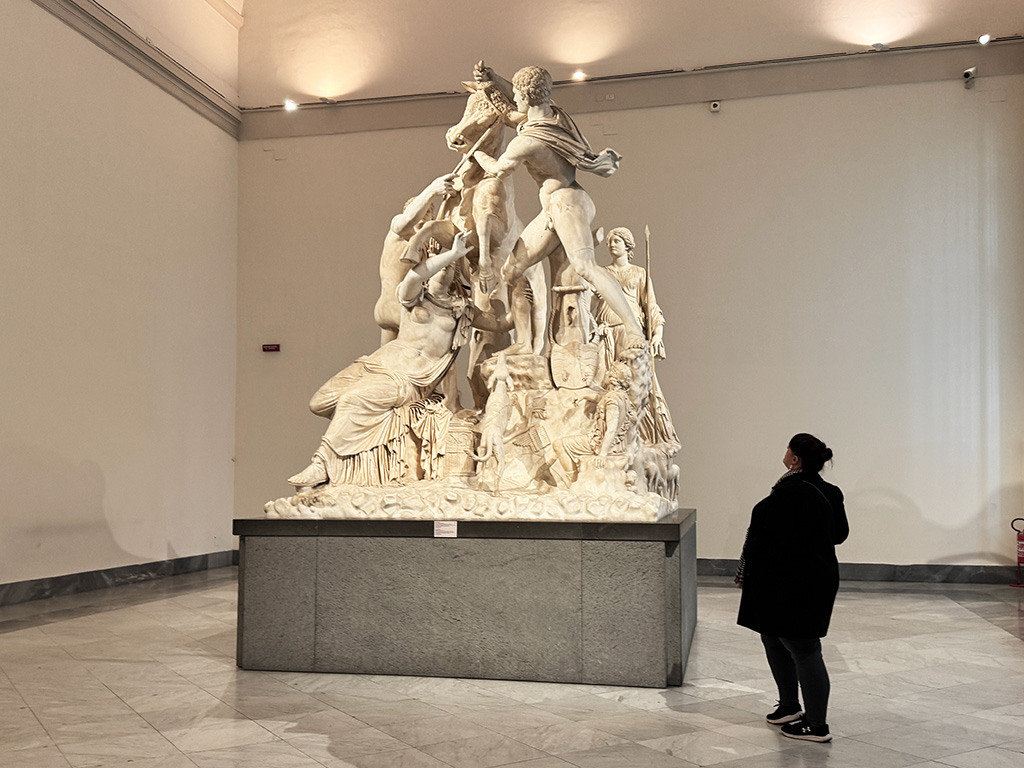
Only by getting up and close personal with the Farnese Bull, as Sara is here, can you fully appreciate this masterpiece of classical sculpture
Beyond the various ancient masterpieces, the Farnese Collection also includes an extensive gem collection, other Roman antiquities and more.
First and Second Floors: Pompeii Mosaics & Frescoes
When Pompeii and Herculaneum were uncovered, starting in the late 1700s, much of the most delicate finds were brought to Naples for preservation, protection and restoration.
The upper floors of the MANN are filled with some of the best examples of Roman mosaics and frescoes, many of which have been diligently restored, bringing out their original vibrancy.
The most famous mosaic example here is the so-called Alexander Mosaic, a breathtaking masterpiece made of millions of tiny tiles. Measuring nearly 6 meters long and just over 3 meters wide, this mosaic depicts Alexander the Great in full battle mode against the Persian king Darius III.
This huge mosaic and the room it is in has been under restoration for a long time – the last time Sara and I saw it freely was 2014. Currently it is partially visible through windows to the room in which expert restorers are working to preserve the mosaic, which still gives you a sense of the scale.
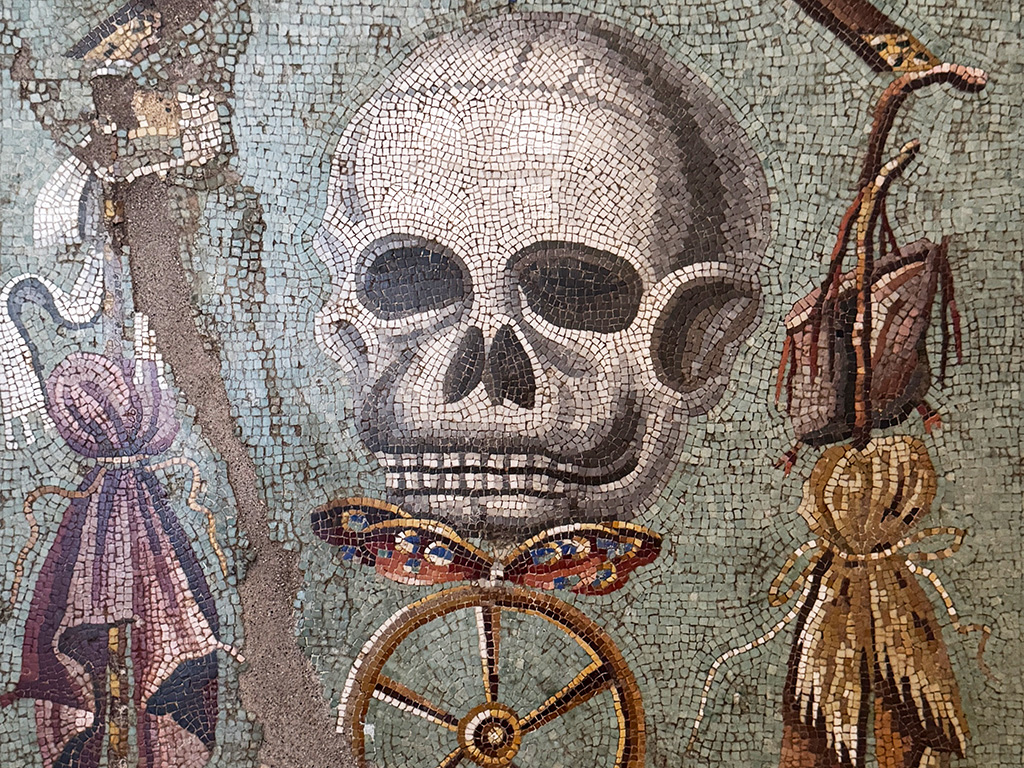
Some of the world’s best examples of mosaics from the time of ancient Rome are housed at the MANN
Second Floor: The Secret Cabinet (Gabinetto Segreto)
This (once censored) collection of ancient erotic art and artefacts comes from the ruins of Pompeii, and provides a fascinating insight into the lives of the ancient residents of the city.
Called the ‘Secret Cabinet’ or ‘Secret Room’, the Bourbons kept the collection out of the main museum, with access only allowed to a few people. It was not until 2000 that the rooms became fully open to the public.
These rooms are small but packed full of unique sculptures and day-to-day items, as well as frescoes taken directly from Pompeii’s structures. The content is adult but presented academically so that we can learn about the realities of daily life before Mount Vesuvius destroyed the city.
You do not have to enter these rooms if you do not wish to however, they are clearly signposted within the galleries and are at the end of one section. Children are also not allowed inside without an adult present (parents, teachers etc.)
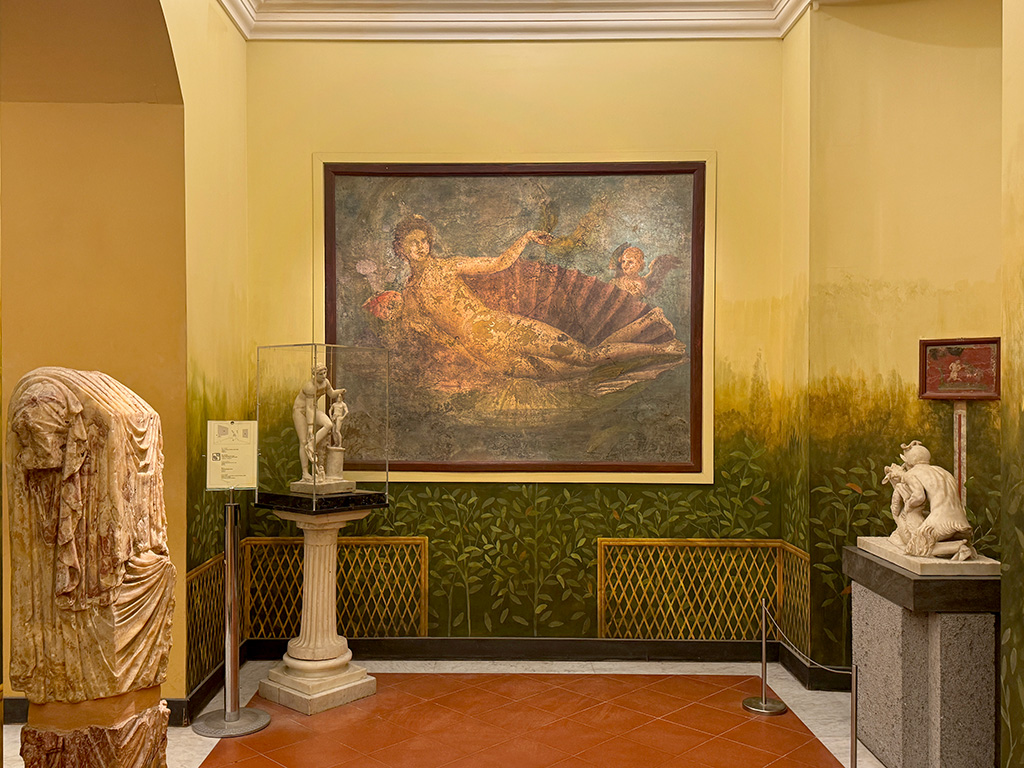
The items in the The Secret Cabinet (Gabinetto Segreto) at the MANN are adult in nature but are authentic artefacts from antiquity
Egyptian Collection
Located in the basement (so can be visited either when you first arrive or as you leave), this is one of the most significant Egyptian antiquity displays in Italy (second only to the Egyptian Museum in Turin, Piedmont), featuring mummies and ancient tools.
These areas were renovated in 2016 and house notable collections of everyday items from ancient Egypt, as well as standout examples of ancient art from Egypt and Nubia. The exhibitions also explore the relationship of Campania and Egypt in the past, with a well-thought out presentation on the links to finds at Pompeii and Herculaneum.
These highlights really are the tip of the iceberg when it comes to the MANN’s collection. If you are into your history, be sure to allow as much as a full day to explore everything this incredible museum has on display.

Missing Italy? Bring La Dolce Vita to you…🥂
Have you heard of the Roscioli Italian Wine Club? Boxes of organic Italian wine, created by boutique, independant winemakers from across Italy, delivered direct to your doorstep. Find out more here:
Where to Eat and Drink Near the MANN
Owing to its position right in the historic heart of Naples, finding somewhere great to eat and/or drink near the Naples National Archeaological Museum is not difficult. In fact, some of Sara and I’s favourite spots in the whole city are super close to the museum – here are a few to get you started:
- Vitto Pitagorico: Located right across the street from the museum entrance and next to the taxi rank at the MANN, this is a fantastic spot for a light lunch or dinner after a morning/afternoon of exploring the museum. Vitto Pitagorico is a vegan and vegetarian restaurant with high-quality dishes that make the most of Campania’s freshest produce.
- Leopoldo Cafebar: You’ll find numerous Leopoldo bars and cafes dotted around Naples but this one is special; it has two sides, one of which serves exclusively gluten free cakes, panini, savoury bakes and more, as well of course as coffee, soft drinks and alcohol. This is one of our go-to spots for breakfast when in this part of Naples, and especially love the extensive range of local speciality sweets.
- Intra Moenia: You’ll find this “literary café” in Piazza Bellini, less than 10 minutes walk south from the MANN in the direction of Spaccanapoli and the historic center. This is the perfect spot for a spritz and or a light snack in the afternoon, in advance of dinner.
There is also a small café/bistro inside the museum itself offering simple snacks and refreshments if you need a quick break during your visit.
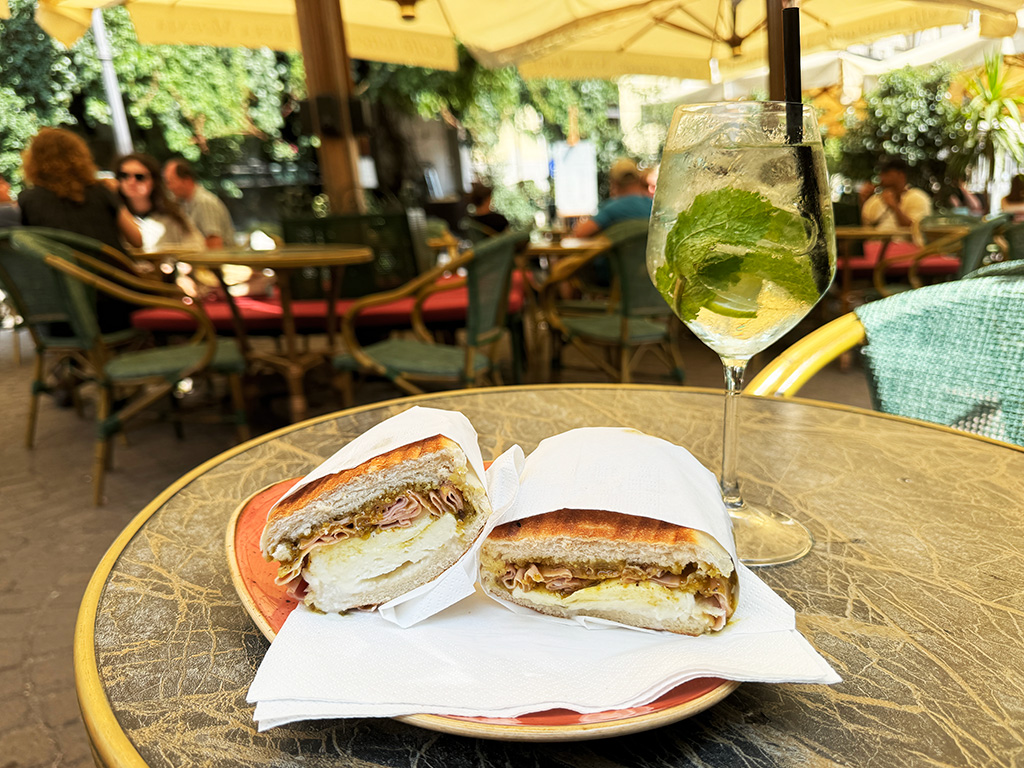
I will typically enjoy a simple lunch at Intra Moenia in Piazza Bellini before or after any visit to the Naples National Archaeological Museum
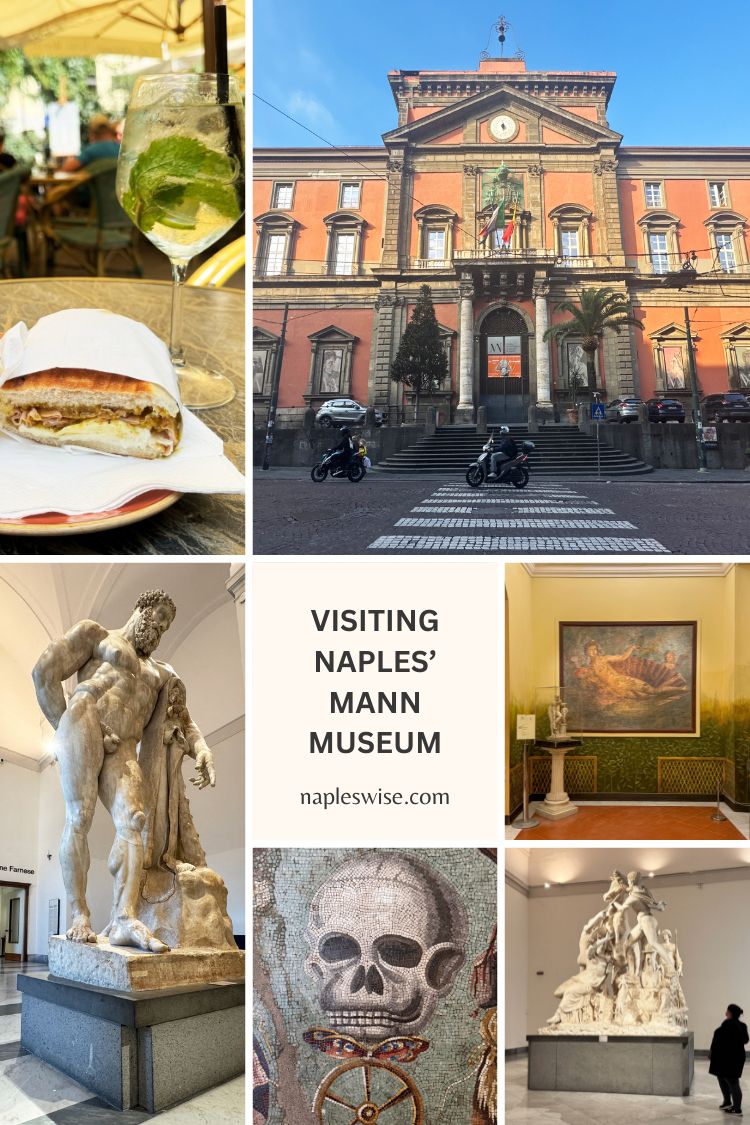
Be sure to Pin this guide if you enjoyed it or found it useful!
Save this page by pinning it and be sure to follow us on Pinterest for more travel inspiration and guides:
To sum up…
I love the collection in the Naples National Archaeological Museum. There is such a fascinating mix of items here, collected at different periods in Naples’ history, which tell the story of ancient Rome’s influence in this part of Italy. The Farnese collection alone is worth visiting for, but I always find that seeing the ruins at Pompeii and then coming here to see the wonderful frescoes and mosaics recovered from there makes the experience complete.
For lots more Naples and Campania travel tips, tricks and recommendations, be sure to subscribe to our 100% free Napleswise newsletter. Subscribers also get exclusive discounts and perks from our friends and partners helping saving you money on your trip here!
Napleswise’s Top Travel Resources
Ready to book your trip to Naples and Campania? Take a look at these helpful links to friends and partners we use ourselves and trust:
🛏️ Search for and book your perfect accommodation
🌊 Book your ferries between Naples, Sorrento, Capri, the Amalfi Coast and more here
🚕 Organise your airport transfer for a stress-free arrival
🧳 Our complete guide to what to pack for Naples & Campania
🏛️ Browse a huge range of tours in Naples, Pompeii, Sorrento and beyond
👌 Experience unique tours and special access to Naples’ most popular sights
🚂 Plan your train journeys and purchase tickets all in one place